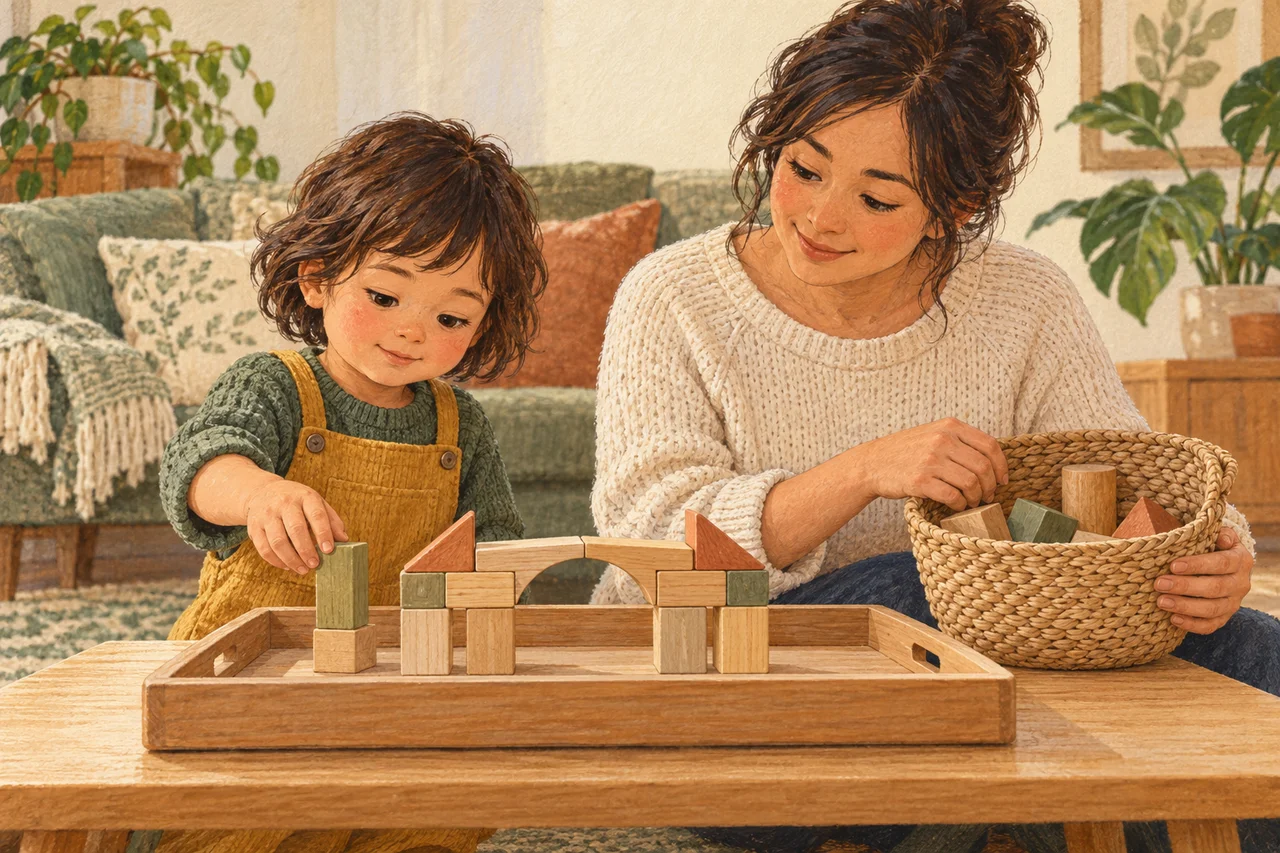
The bridge is nearly finished, but it is time to leave. Your child wants another tower; you need the floor clear. This example is an invitation to finish one small part together, not a way to guarantee an easy goodbye. A child can dislike the ending and still hear a clear, kind limit. Pick only the parts that fit your day. If something is unsafe, stop that action straight away; you do not need a closing ritual first.
Try this, step by step
Say what will happen, without a surprise test
When there is time, name the next thing in plain words: “We will put the blocks away, then get our shoes.” Show the basket or point to the shoes. Avoid asking “Are you ready to stop?” if continuing is not actually an option. You can explain once and stay nearby rather than adding a new warning every few seconds.
Offer a small choice you can genuinely accept
“Would you like to put on the last block, or shall we leave the bridge like this?” Both answers lead to the same ending. The child can answer with a word, a point or no answer. If there is no answer, say what you will do: “I will leave this bridge on the tray and put the loose blocks in the basket.” Do not keep adding choices.
Give the idea somewhere to wait
If the place is safe and available, keep the construction on a tray. If it needs to come apart, ask whether to remember one detail with a sketch or a private family note. Neither is required. Say honestly when the work cannot stay. A photo should be optional and for your family; do not make a public post or a saved record part of the ending.
Close one small part, then move on together
Place the last block or let it wait, put away a few loose pieces and name the next action. “The bridge is waiting here. Now we are getting shoes.” An adult can do most of the tidying; do not make independent clean-up the price of being helped. Stay with the practical next step without requiring a cheerful mood or a perfect goodbye.
What it might sound like
- Child
- No! I still need a tall tower.
- Adult
- You wanted another tower. We are putting the blocks away now so we can go. Would you like this last block on the bridge, or in the basket?
- Child
- On the bridge. I do not want to go.
- Adult
- You can wish we had more time. The bridge can wait on this tray. I will put away the loose blocks and help with your shoes.
Make it fit your family
When leaving is urgent
Skip extra rounds and long explanations. Name the necessary action and help with it. “We need to leave now. I am putting the pieces here and coming with you.” Do not offer a last turn if you cannot safely allow it.
When words are not useful right now
Use one short sentence and a visible next step: basket, shoes or the place you are moving to. Offer pointing instead of a spoken answer. Wait nearby when possible; there is no requirement to explain feelings before getting help.
When the child wants to return to the idea
Say only what you know: “The tray can stay until tomorrow morning,” or “We need this table for dinner, so it cannot stay here.” You can invite a new build another day without promising an exact time. If the place must change, help move or take apart the work rather than leaving the child to manage it alone.
You do not need to…
- Using repeated countdowns, a race, a threat to throw the work away, or a reward that turns every ending into a negotiation.
- Secretly saving photos, demanding a hug or a happy goodbye, or promising “later” simply to end the conversation.
A warm way to finish
An ending can be brief: “We made a bridge with a bend. This piece is staying on the tray.” Later, if it is useful, ask what could make the next ending easier. The answer may be a place for the project, fewer pieces or adult help. You do not need to judge this ending as a success or a failure, and the next playtime does not have to be earned.
One thing to remember
Keep the limit clear and the help available. An unfinished idea can still have a kind ending.
Try it together
These are play ideas, not a checklist or a developmental assessment. Change the plan or stop whenever your family needs to.