2–4 yearsFinger
Finger
painting
Build coordination
and discover color.
everyday ideas
Small games that fit into real life. No hour-long setup — just start with curiosity.
 PLAY TOGETHER
5–6 years · 10 min
Find five things in one color — then make up a story that connects them.
start with what you need
Choose one real family moment. We’ll take you straight to a short activity with clear steps.
your next shared moment
more ways to spend time together
tiny wins
quick start
Build coordination
and discover color.
Notice small details
and slow down together.
Grow language, imagination
and a sense of humor.
made for this moment
Tell us what today looks like. We will choose one simple activity from the library.
Choose a few details and we will pick one small adventure.
learn by doing
Pick a skill and find a tiny activity to try today. Each one grows something useful — while still feeling like play.
one idea to remember
When a child feels safe and seen, their brain is ready to notice, try and learn.
Listen for three sounds around you and copy them together.
Make a pattern with spoons, socks or blocks. What comes next?
Move like a bear, a cat and a tiny mouse across the room.
Choose a weather word for your mood and say what might help.
Try a different age or skill to discover more ideas.
a gentle rhythm
Three small steps are enough for a day full of discoveries. Pick a pace that feels kind to your family.
Tap the button and we’ll suggest a light three-step rhythm for today.
Wake up the body.
Follow a small question.
Leave something behind.
 NEW · PLAY ON SCREEN
a quiet minute together
A gentle visual breathing game for moments when the day feels fast. Follow three easy cycles, then take the printable path away from the screen.
tiny knowledge
Tap a card to turn a “why?” into a small discovery you can make together.
for grown-ups
Play is not a test. Use this little guide to notice what your child is practicing today — and celebrate the attempt.
Young children learn through movement, repetition and naming what they see.
fresh picks

Look, cover, remember: five everyday objects become a tiny brain game.

Make a prediction, test it in water and talk about what surprised you.

Act out a feeling without words and notice the clues your body gives.
Follow a friendly balloon through three slow, calming breaths.

Find a soft thing, a round thing and a sound — then celebrate the search.

Make characters from your hands and invent a tiny bedtime performance.
A gentle picture story about ice and water, with a grown-up’s guide and a blank before-and-after sheet.

Tap a spoon, clap a rhythm and take turns being the conductor.

Draw a room map, hide a clue and guide your explorer with directions.

Collect visual clues in a real artwork and explain what your eyes discovered.

Observe changing phases and discover how sunlight makes the Moon shine.
Describe a changing cloud and turn the sky into a storybook.
Four questions about shape, colours, size and change — with pictures and an adult-led real-world guide.
Compare damp and dry seeds, then follow the first root for five days.

Copy slow movements, swap roles and finish with one shared pose.

Use touch words to describe and guess a safe hidden object.

Build, test and improve a tiny bridge for one light toy.

Turn one caring moment into a clear three-sentence family news story.
Try another word or choose a different age.
What comes next in the pattern?
Choose a shape together.
play in real life
Choose a scene that feels like today. Every photo opens a complete activity you can try together.

Copy three animals, change the speed and let the child lead.
Pick a color, make a mark and turn it into a shared story.
Five familiar objects become a gentle memory challenge.

Sort shapes, spot similarities and explain a brand-new rule.
look like an artist
Slow down with a real work of art. Tap for a new looking question, then turn what you noticed into play.
PUBLIC DOMAINKatsushika Hokusai
The artist made the giant wave feel close and Mount Fuji look tiny in the distance.
Can you find the small mountain hiding under the wave?
 PUBLIC DOMAIN
Edward Hicks
Animals that would rarely rest together share one calm, imagined place.
Which animal did your eyes find first?
 PUBLIC DOMAIN
Vincent van Gogh
Van Gogh used many yellows, greens and browns to make each flower feel different.
How many different kinds of yellow can you spot?
Images are marked Public Domain by The Metropolitan Museum of Art and are stored locally for offline viewing.
learn to read
Short original stories with large type, gentle repetition and questions to talk about together.
open story shelf
Three free classics from Project Gutenberg, each paired with a playful conversation starter.
Short animal tales about choices, clever ideas and consequences.
Old folk stories full of forests, unusual helpers and difficult decisions.
Familiar rhymes expanded into curious little stories and characters.
Project Gutenberg marks these editions as public domain in the USA. Check the law where you live before redistributing the original books.
a week of curiosity
Choose one playful moment each day. Tick it when you try it — there is no need to do everything perfectly.
Find three shades of one color.
Cross the room like three animals.
Predict what will sink or float.
Join three strange words in a tale.
Collect five discoveries with your senses.
parent pocket guide
Short, practical answers for the moments that happen in real family life.
परिवार के रोज़मर्रा के लिए छोटी मदद
व्यावहारिक मार्गदर्शिकाएँ: पूरा उदाहरण, कहने के लिए आसान बातें और एक छोटा अगला कदम। अपनी गति से पूरा पन्ना पढ़ें।
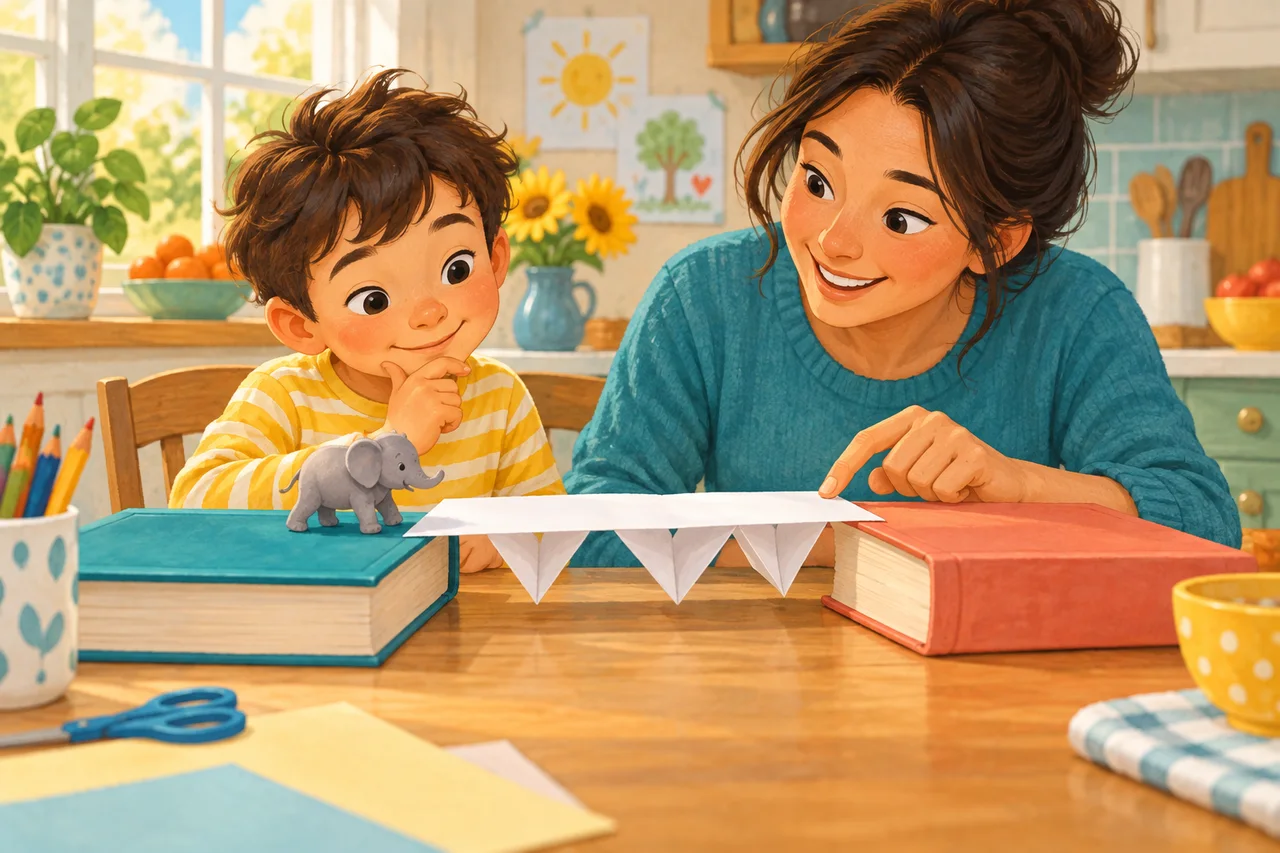
गिरा पुल, गलत रास्ता या अधूरा चित्र: काम अपने हाथ में लिए बिना एक छोटी कोशिश में साथ दें।
पूरी मार्गदर्शिका पढ़ें
एक चित्र, कुछ परिचित शब्द और छोटी बातचीत। बच्चा अकेले कितना पढ़ता है, उससे ज़्यादा कहानी का आनंद ज़रूरी है।
पूरी मार्गदर्शिका पढ़ें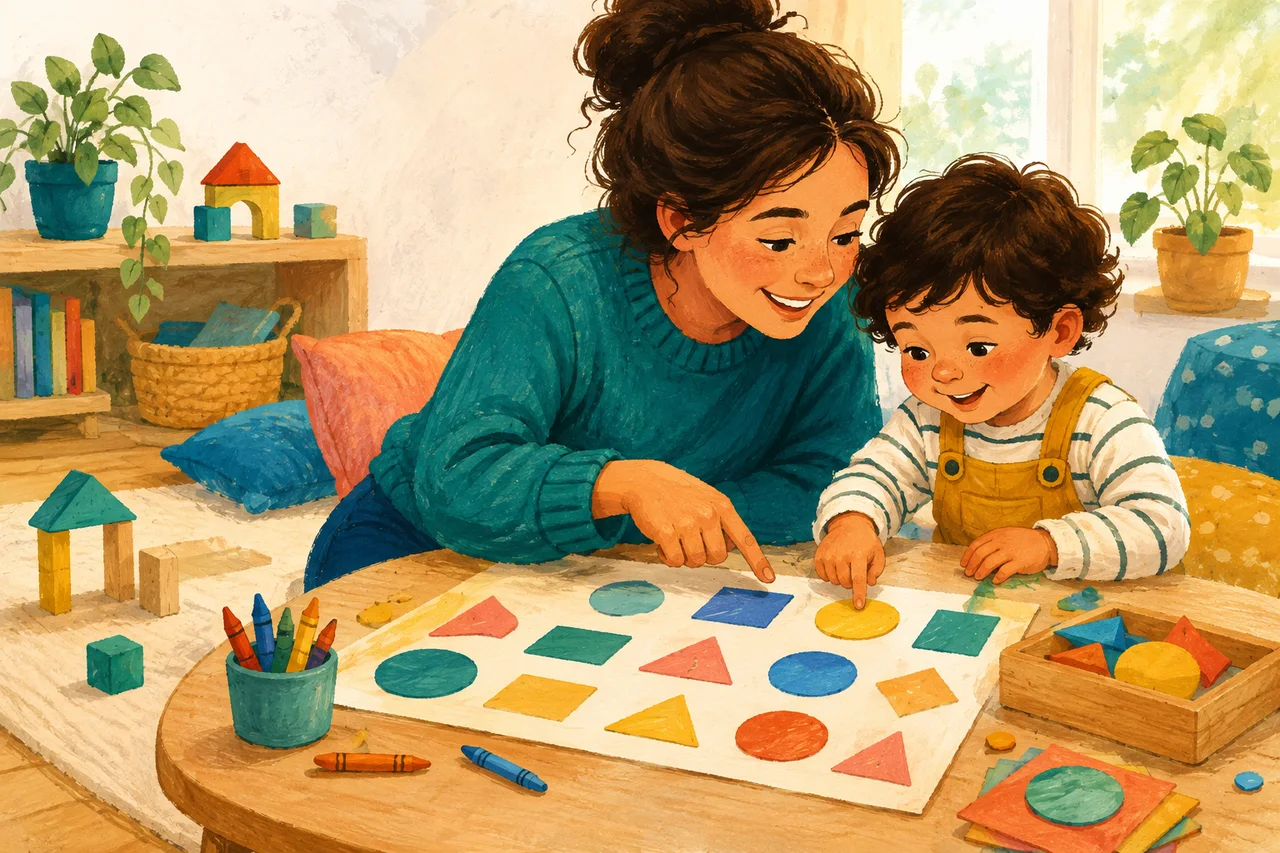
हर बच्चे को सच्ची भूमिका दें; बड़े को शिक्षक न बनाएँ और छोटे से उसकी गति पकड़ने की उम्मीद न रखें।
पूरी मार्गदर्शिका पढ़ें
एक निमंत्रण, दो छोटे दौर और प्यार से समापन। खास खरीदारी या बिल्कुल अच्छे मूड की ज़रूरत नहीं।
पूरी मार्गदर्शिका पढ़ें
स्पष्ट समापन, छोटा चुनाव और अधूरी कल्पना के लिए जगह। बार-बार उलटी गिनती या न निभने वाले वादों के बिना बातचीत का उदाहरण।
पूरी मार्गदर्शिका पढ़ेंFive focused minutes can be enough. Continue while your child is curious; finish before play becomes a struggle.
Offer two simple choices, begin playing yourself or save the idea for another day. Refusing is communication, not failure.
Wait a few seconds, notice what your child already tried and give the smallest useful hint. Questions often work better than answers.
Describe the effort specifically: “You kept trying different paths.” This helps children notice their own strategy and persistence.
Treat the minute of connection as a complete game. Offer one new choice, but stop warmly if attention has moved somewhere else.
Give them different roles in the same game: one child can search or move while the other explains, records or invents the next challenge.
Pause before teaching. Name the feeling, make the next step smaller and show that changing a plan is part of learning.
Yes. Repetition builds confidence and lets a child notice something new. Change only one detail when the familiar version becomes easy.
a kind reset
Choose the closest situation and get one small, pressure-free next step.
There is no need to rescue the whole day. One calm connection is enough.
for a quiet moment
तीन कठिनाई स्तरों में रास्ता खोजें। स्क्रीन का हरा संकेत प्रिंट नहीं होता।
शीट खोलें ↗घर, खरगोश या तितली चुनें। सफ़ेद रेखाचित्र या अपने रंग प्रिंट करें।
शीट खोलें ↗
छह चित्र: ध्यान दें, कल्पना करें या छोड़ें। खाली ए4 शीट पर अपने निशान बनाएँ; स्क्रीन के चुनाव नहीं छपते।
शीट खोलें ↗ताल के चिह्न थपथपाएँ, अधूरा क्रम पूरा करें और अपनी ताल बनाएँ।
शीट खोलें ↗

चित्र देखें या बड़े के साथ एक असली अवलोकन करें। खाली ए4 शीट पर पहले और बाद का चित्र बनाएँ; स्क्रीन के चुनाव नहीं छपते।
शीट खोलें ↗बड़े के साथ सुरक्षित खाली जगह में कार्ड की चालें आज़माएँ।
शीट खोलें ↗दो चित्रित बगीचों की तुलना करें और पाँच बदलावों पर घेरा लगाएँ। खेल में चित्रों की दूसरी जोड़ी भी चुन सकते हैं।
शीट खोलें ↗रास्ते या बंद खिड़की का दृश्य चुनें। खेल के वही नौ चित्र वाले संकेत छापें; उपलब्ध न हों तो बिना निशान छोड़ सकते हैं।
शीट खोलें ↗चीज़ें देखो, तस्वीर ढको और याद रहने वाली चीज़ों पर घेरा लगाओ।
शीट खोलें ↗

अपनी चीज़ों, विचारों और असली अवलोकनों के लिए तीन खाली रिकॉर्ड और आगे खोजने का सवाल।
शीट खोलें ↗6, 8 या 10 बिंदु वाला पत्ता, नाव या तारा चुनें। कागज़ पर खेल वाला ही चित्र है।
शीट खोलें ↗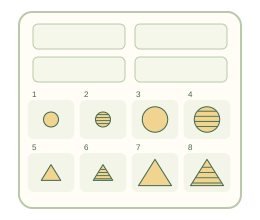
अभी के नियम और वही आठ चित्र वाले टुकड़े छापें। खाली ट्रे में नंबर लिखें; काटना ज़रूरी नहीं।
शीट खोलें ↗आराम से साँस लेते हुए राहें उँगली से छुओ और अपना गुब्बारा बनाओ।
शीट खोलें ↗दो ए4 पन्नों पर आठ चित्र वाले काल्पनिक कहानी कार्ड। बारी से अभिनय करें, शब्द सुझाएँ और बिना अंक कलाकार का विचार सुनें।
शीट खोलें ↗


बारह चित्र वाले कार्ड: चार पात्र, चार जगहें, चार अनोखी चीज़ें और नए विचार के लिए खाली जगह।
शीट खोलें ↗तीन दृश्यों की कहानी सोचें और बड़े की मदद से कागज़ के पात्र तैयार करें।
शीट खोलें ↗


चार चित्र वाले सवालों में से एक चुनें। खाली ए4 शीट पर अनुमान और सच्चे अवलोकन का चित्र बनाएँ; स्क्रीन के चुनाव नहीं छपते।
शीट खोलें ↗कागज़ के तीन आकारों की तुलना करें। दूरी, ब्लॉक की संख्या और असली परिणाम लिखें।
शीट खोलें ↗शीर्षक और तीन अवलोकन लिखें या बोलकर लिखवाएँ। काल्पनिक और असली कहानियाँ साफ़ अलग रखें।
शीट खोलें ↗keep close
Tap the heart on any game you want to come back to later.
friends & useful links
Independent projects, channels and practical services worth keeping nearby.
Partner links open external websites. A grown-up should preview them before sharing with a child. Some include referral identifiers.Choose a year and country to explore how population, cities, forests and technology changed.
Visit partner ↗Practical examples and calculators for the systems that keep a home working.
Visit partner ↗Tools for ad blocking, DNS filtering and private connections.
A microtask marketplace. Review the conditions independently before using it.
Open service ↗
चार चित्र वाले उदाहरण देखो, ठोस और खोखले आकार की तुलना करो, फिर बड़े के साथ अपना असली अवलोकन लिखो।
यहीं आज़माएँ
नीचे की मार्गदर्शिका तैयार है। स्क्रीन के खेल, प्रिंट के साधन और निजी नोट के लिए JavaScript चाहिए। अगर वे न दिखें तो JavaScript चालू करके पन्ना फिर लोड करें।
शुरू करने से पहले
हाथ की पहुँच में रहकर पूरे समय ध्यान दें। चीज़ें धीरे रखें, गिरा पानी पोंछें और गतिविधि के बाद तुरंत ट्रे खाली करें। केवल चित्र भी पर्याप्त हैं।
अनुमान, समझाने वाले चित्र और असली अवलोकन को अलग रखना बिना अंक दिए ध्यान से तुलना करना सिखाता है।
छोटे हाथों के लिए
असली पानी के पास बड़ा व्यक्ति साथ रहे; बिना पानी के विचार भी बना सकते हैं। अपनी जाँची हुई चीज़ें चुनें। यह खाली शीट स्क्रीन के अनुमान नहीं भरती और परिणाम नहीं बताती।
रुकें और आज़माएँ
खेलते समय पूछें
यह क्यों मदद करता है
अनुमान, समझाने वाले चित्र और असली अवलोकन को अलग रखना बिना अंक दिए ध्यान से तुलना करना सिखाता है।
बच्चे के अनुसार बदलें
जहाँ सहज लगे वहाँ से शुरू करें और बच्चे की रुचि के साथ चुनौती बदलें।
विचारों की छोटी प्रयोगशाला
साथ देखें, एक बात बताएँ और अलग परिणाम की गुंजाइश रखें। उद्देश्य विचार की तुलना सच में देखी बात से करना है, हर अनुमान सही करना नहीं।
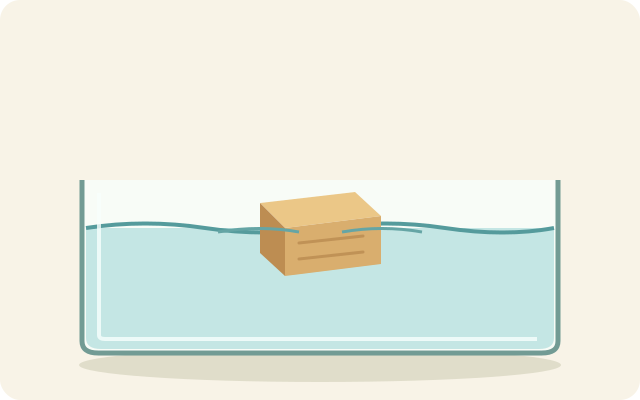
यह गुटका कुछ पानी के भीतर और ऊपर का भाग सतह से बाहर बना है।
उदाहरण की लकड़ी का घनत्व पानी से कम है। गुटके का हिस्सा पानी हटाता है और पानी उसे सहारा देता है। दूसरी लकड़ी या सोखा पानी असली परिणाम बदल सकते हैं।
पानी गुटके से कहाँ मिलता है?पानी का स्तर: पानी की सतह गुटके के किनारों को छूती है; तैरना पूरी तरह सूखा रहना नहीं है।
सामग्री: यह हल्की लकड़ी का उदाहरण है। «लकड़ी» हर गुटके के परिणाम का वादा नहीं है।
आकार: गुटका ठोस है, खोखली नाव नहीं। इस उदाहरण में सामग्री महत्वपूर्ण है।
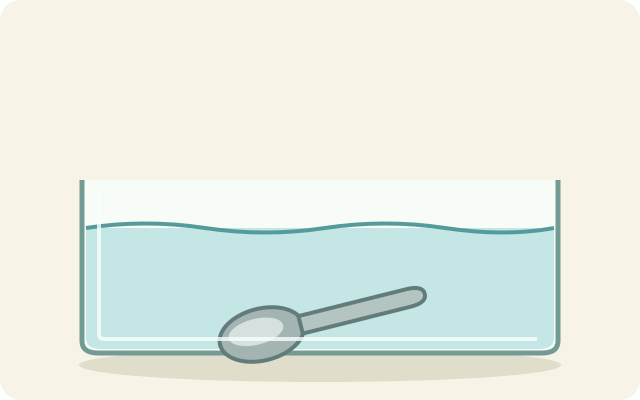
स्टील का चम्मच तली पर टिका बना है।
ठोस स्टील का घनत्व पानी से अधिक है। यहाँ चम्मच नीचे जाता है; चित्र तुम्हारे खास चम्मच की जाँच नहीं है। खोखली या अलग तरह बनी चीज़ को अलग देखना होगा।
क्या बताता है कि चम्मच स्वतंत्र रूप से नहीं तैर रहा?पानी का स्तर: पूरा चम्मच सतह से नीचे है और तली को छूता है।
सामग्री: यह ठोस स्टील है, केवल चमकती दिखने वाली हर चीज़ नहीं।
आकार: चम्मच की परिचित बनावट ठोस स्टील को पानी न घुसने वाला खोखला ढाँचा नहीं बनाती।
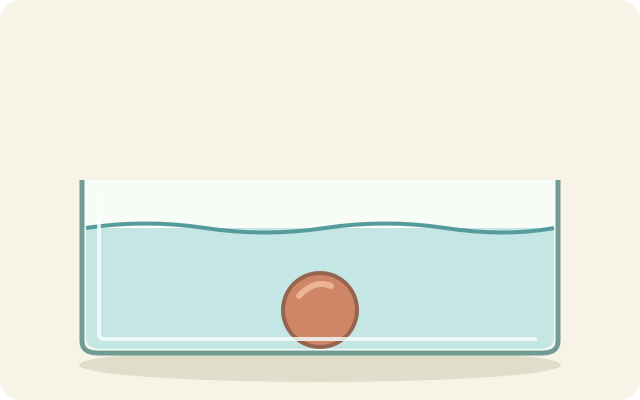
क्ले का ठोस गोला सतह से नीचे बना है।
इस ठोस सामग्री का घनत्व पानी से अधिक है। उसी क्ले का छोटा गोला केवल छोटा होने से कम घनत्व वाला नहीं बनेगा।
क्ले की मात्रा बदले बिना क्या बदल सकते हैं?पानी का स्तर: गोला पानी के स्तर से नीचे तली को छूता बना है।
सामग्री: यह पानी से अधिक घनत्व वाली क्ले का मॉडल है। हर मॉडलिंग उत्पाद एक जैसा नहीं होता।
आकार: गोले में पानी को बाहर रखने वाली बड़ी खोखली जगह नहीं है। नाव से तुलना करो।
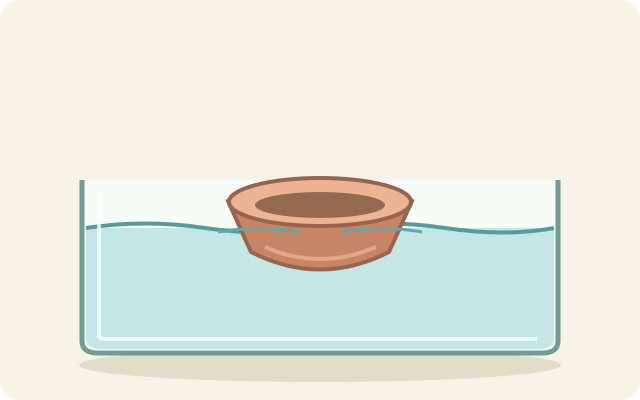
नाव तैरती बनी है और उसका किनारा पानी से ऊपर है।
खोखली बनावट किनारे से पानी आने से पहले पर्याप्त पानी हटा सकती है। क्ले की मात्रा नहीं बदली। चित्र में ढाँचा साबुत है; असली नाव रिस सकती या डूब सकती है।
क्या बदला: सामग्री, क्ले की मात्रा या आकार?पानी का स्तर: इस चित्र में पानी बाहर की दीवार से किनारे के नीचे मिलता है; बीच सूखा है।
सामग्री: यह जोड़ी वाले गोले जितनी ही क्ले और वही सामग्री है।
आकार: चौड़ी खोखली बनावट ऐसी जगह बनाती है जिसमें पानी अभी नहीं गया। इससे तैरने पर असर पड़ सकता है।
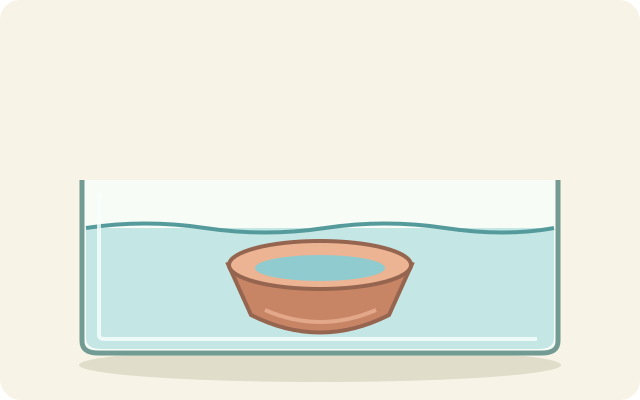
इन तीन चित्रों में उतनी ही मॉडलिंग क्ले है, जिसका घनत्व पानी से अधिक है। आखिरी चित्र में नाव के अंदर पानी भी है। ये उदाहरण हैं, माप या हर नाव के तैरने की गारंटी नहीं।
ठोस क्ले का गोला सतह से नीचे बना है।
इस क्ले के ठोस टुकड़े का घनत्व पानी से अधिक है। केवल उसका आकार छोटा-बड़ा करने से सामग्री का यह गुण नहीं बदलता।
चौड़ी खोखली नाव तैरती बनी है और उसका किनारा पानी से ऊपर है।
चौड़ी खोखली बनावट किनारे के डूबने से पहले इतना पानी हटा सकती है कि पानी क्ले को सहारा दे। क्ले खुद हल्की नहीं हुई है।
नाव में पानी आ गया; इस चित्र में वह डूब रही है।
क्ले उतनी ही है, पर अंदर का पानी भार बढ़ाता है। पानी भरने पर नाव डूब सकती है। असली परिणाम आकार और रिसाव पर भी निर्भर है।
बड़े की जाँच के बाद गोल किनारों वाला लकड़ी का गुटका या बड़ा गोल धातु का चम्मच उपयुक्त हो सकता है। तौलिया पास रखें। चित्र देखने के लिए क्ले लेना ज़रूरी नहीं; आगे प्रयोग करें तो केवल उम्र के अनुकूल, निर्माता द्वारा पानी के लिए अनुमत सामग्री लें।
इशारे, बोलकर या चित्र से बताएँ कि क्या हो सकता है। «अभी पता नहीं» भी उपयोगी है। बड़ा व्यक्ति एक चीज़ धीरे से रखे, उसे हिलने की जगह दे और नीचे न दबाए।
चीज़ सतह के पास, नीचे या ट्रे को छू रही है? चेहरा पानी के पास लाए बिना बगल से देखें। आकार और हवा वाले खाली हिस्से देखें। तली पर टिकना स्वतंत्र रूप से तैरने का प्रमाण नहीं है।
चीज़ और उसकी जगह बनाएँ या बड़े से लिखने को कहें। दोहराएँ तो चीज़ और परिस्थितियाँ यथासंभव समान रखें और जो बदला वह बताएँ। एक अवलोकन पर रुकना ठीक है; बड़े के साथ ट्रे खाली करें।
नहीं। केवल वज़न तय नहीं करता। ठोस चीज़ के घनत्व की तुलना पानी से करना मदद करता है। कुछ लकड़ियों का बड़ा टुकड़ा तैर सकता है, जबकि बहुत छोटी ठोस स्टील की चीज़ डूब सकती है।
खोखले ढाँचे में खाली जगह होती है। किनारा डूबने से पहले वह अपने वज़न को संतुलित करने जितना पानी हटा सकता है। अंदर की जगह सहित पूरा जहाज़ ठोस धातु के टुकड़े जैसा नहीं है। यह आसान व्याख्या है, डिज़ाइन की गणना नहीं।
हर चीज़ के लिए एक परिणाम का वादा नहीं है। सामग्री का प्रकार, सोखा पानी, अंदर की हवा, छेद और आकार असर डाल सकते हैं। नाम को पक्का जवाब मानने के बजाय चीज़ जाँचें और देखें।
नहीं। चित्र में पानी से अधिक घनत्व वाली क्ले, चौड़ा साबुत ढाँचा और अंदर पानी न आने की स्थिति है। असली मॉडलिंग सामग्री अलग होती है; सँकरा आकार, दरार या अंदर का पानी परिणाम बदल सकता है। उदाहरण की नकल करने के बजाय जो देखा उसे बताएँ।
नहीं। चित्रों की तुलना करें, पानी का स्तर दिखाएँ, एक सवाल पूछें और रुक जाएँ। विचार बोलना या सुनना भी भागीदारी है। खुले चित्रों की संख्या सीखने के अंक नहीं है।
खेल की पूरी मार्गदर्शिका
शुरू करने, प्रगति देखने और दूसरे दिन आगे बढ़ने की सरल लय। डूबेगा या तैरेगा? — 12 मिनट.
तैयार करें: यदि पानी लें तो थोड़े कमरे के तापमान वाले पानी की उथली न टूटने वाली ट्रे, तौलिया, एक बड़ी, चिकनी, जाँची हुई पानी के लिए उपयुक्त चीज़.
कोई चित्र वाली चीज़ चुनो और उदाहरण खोलने से पहले एक बात बताओ। क्ले के गोले और खोखली नाव की तुलना करो: सामग्री और मात्रा को आकार से अलग रखो।
क्ले के गोले और नाव के बीच क्या बदला?
इस खेल के कौशल
अनुमान, समझाने वाले चित्र और असली अवलोकन को अलग रखना बिना अंक दिए ध्यान से तुलना करना सिखाता है।
चरण पूरे करने से विचार, काम और परिणाम जुड़ते हैं।
अपना चुनाव समझाने से भाषा और आत्मविश्वास बढ़ते हैं।
देखें, परीक्षा न लें
ये ध्यान देने के संकेत हैं, बच्चे के लिए अनिवार्य सूची नहीं।
कम मदद से एक चरण शुरू करता है।
अचानक नतीजे के बाद भी उत्सुक रहता या दूसरा तरीका आज़माता है।
चुनाव समझाने के लिए नया शब्द, हरकत या विचार इस्तेमाल करता है।
सोच खोलने वाले शब्द
हल्का संकेत देखने के लिए सवाल दबाएँ। केवल एक सवाल पूछें और बच्चे को अपनी बात सोचने का समय दें।
रुकें और इंतज़ार करें। बच्चे को कुछ शांत सेकंड चाहिए हो सकते हैं।
पूछें: “तुमने यह कैसे देखा?”
अगली कोशिश के लिए एक छोटा बदलाव बच्चा चुने।
एक सवाल चुनें — तीनों पूछना ज़रूरी नहीं है।
जिज्ञासा जारी रखें
एक चित्र चुनें। पानी का स्तर दिखाएँ या एक बात सुनें; अनुमान और सभी उदाहरण खोलना ज़रूरी नहीं।
बच्चे को एक हिस्सा तैयार करने, नियम समझाने और खेल कब पूरा है यह तय करने दें।
उतनी ही क्ले के गोले, खोखली नाव और अंदर पानी वाली नाव की तुलना करें। असली जाँच सुझाने से पहले बताएँ कौन-सी परिस्थिति बदली।
remember the moment
What made your child smile? Keep one thought here for the next play day.
Open the family notebook →
look & learn
think together
a month of little moments
talk with Lumi
today's little mission
Lumi's word of the day
four gentle weeks
 1
 2
 3