2–4 yearsFinger
Finger
painting
Build coordination
and discover color.
everyday ideas
Small games that fit into real life. No hour-long setup — just start with curiosity.
 PLAY TOGETHER
5–6 years · 10 min
Find five things in one color — then make up a story that connects them.
start with what you need
Choose one real family moment. We’ll take you straight to a short activity with clear steps.
your next shared moment
more ways to spend time together
tiny wins
quick start
Build coordination
and discover color.
Notice small details
and slow down together.
Grow language, imagination
and a sense of humor.
made for this moment
Tell us what today looks like. We will choose one simple activity from the library.
Choose a few details and we will pick one small adventure.
learn by doing
Pick a skill and find a tiny activity to try today. Each one grows something useful — while still feeling like play.
one idea to remember
When a child feels safe and seen, their brain is ready to notice, try and learn.
Listen for three sounds around you and copy them together.
Make a pattern with spoons, socks or blocks. What comes next?
Move like a bear, a cat and a tiny mouse across the room.
Choose a weather word for your mood and say what might help.
Try a different age or skill to discover more ideas.
a gentle rhythm
Three small steps are enough for a day full of discoveries. Pick a pace that feels kind to your family.
Tap the button and we’ll suggest a light three-step rhythm for today.
Wake up the body.
Follow a small question.
Leave something behind.
 NEW · PLAY ON SCREEN
a quiet minute together
A gentle visual breathing game for moments when the day feels fast. Follow three easy cycles, then take the printable path away from the screen.
tiny knowledge
Tap a card to turn a “why?” into a small discovery you can make together.
for grown-ups
Play is not a test. Use this little guide to notice what your child is practicing today — and celebrate the attempt.
Young children learn through movement, repetition and naming what they see.
fresh picks

Look, cover, remember: five everyday objects become a tiny brain game.

Make a prediction, test it in water and talk about what surprised you.

Act out a feeling without words and notice the clues your body gives.
Follow a friendly balloon through three slow, calming breaths.

Find a soft thing, a round thing and a sound — then celebrate the search.

Make characters from your hands and invent a tiny bedtime performance.
A gentle picture story about ice and water, with a grown-up’s guide and a blank before-and-after sheet.

Tap a spoon, clap a rhythm and take turns being the conductor.

Draw a room map, hide a clue and guide your explorer with directions.

Collect visual clues in a real artwork and explain what your eyes discovered.

Observe changing phases and discover how sunlight makes the Moon shine.
Describe a changing cloud and turn the sky into a storybook.
Four questions about shape, colours, size and change — with pictures and an adult-led real-world guide.
Compare damp and dry seeds, then follow the first root for five days.

Copy slow movements, swap roles and finish with one shared pose.

Use touch words to describe and guess a safe hidden object.

Build, test and improve a tiny bridge for one light toy.

Turn one caring moment into a clear three-sentence family news story.
Try another word or choose a different age.
What comes next in the pattern?
Choose a shape together.
play in real life
Choose a scene that feels like today. Every photo opens a complete activity you can try together.

Copy three animals, change the speed and let the child lead.
Pick a color, make a mark and turn it into a shared story.
Five familiar objects become a gentle memory challenge.

Sort shapes, spot similarities and explain a brand-new rule.
look like an artist
Slow down with a real work of art. Tap for a new looking question, then turn what you noticed into play.
PUBLIC DOMAINKatsushika Hokusai
The artist made the giant wave feel close and Mount Fuji look tiny in the distance.
Can you find the small mountain hiding under the wave?
 PUBLIC DOMAIN
Edward Hicks
Animals that would rarely rest together share one calm, imagined place.
Which animal did your eyes find first?
 PUBLIC DOMAIN
Vincent van Gogh
Van Gogh used many yellows, greens and browns to make each flower feel different.
How many different kinds of yellow can you spot?
Images are marked Public Domain by The Metropolitan Museum of Art and are stored locally for offline viewing.
learn to read
Short original stories with large type, gentle repetition and questions to talk about together.
open story shelf
Three free classics from Project Gutenberg, each paired with a playful conversation starter.
Short animal tales about choices, clever ideas and consequences.
Old folk stories full of forests, unusual helpers and difficult decisions.
Familiar rhymes expanded into curious little stories and characters.
Project Gutenberg marks these editions as public domain in the USA. Check the law where you live before redistributing the original books.
a week of curiosity
Choose one playful moment each day. Tick it when you try it — there is no need to do everything perfectly.
Find three shades of one color.
Cross the room like three animals.
Predict what will sink or float.
Join three strange words in a tale.
Collect five discoveries with your senses.
parent pocket guide
Short, practical answers for the moments that happen in real family life.
ayuda para la vida familiar de verdad
Guías prácticas con un ejemplo completo, frases que puedes usar y un pequeño siguiente paso. Abre la página y lee a tu ritmo.
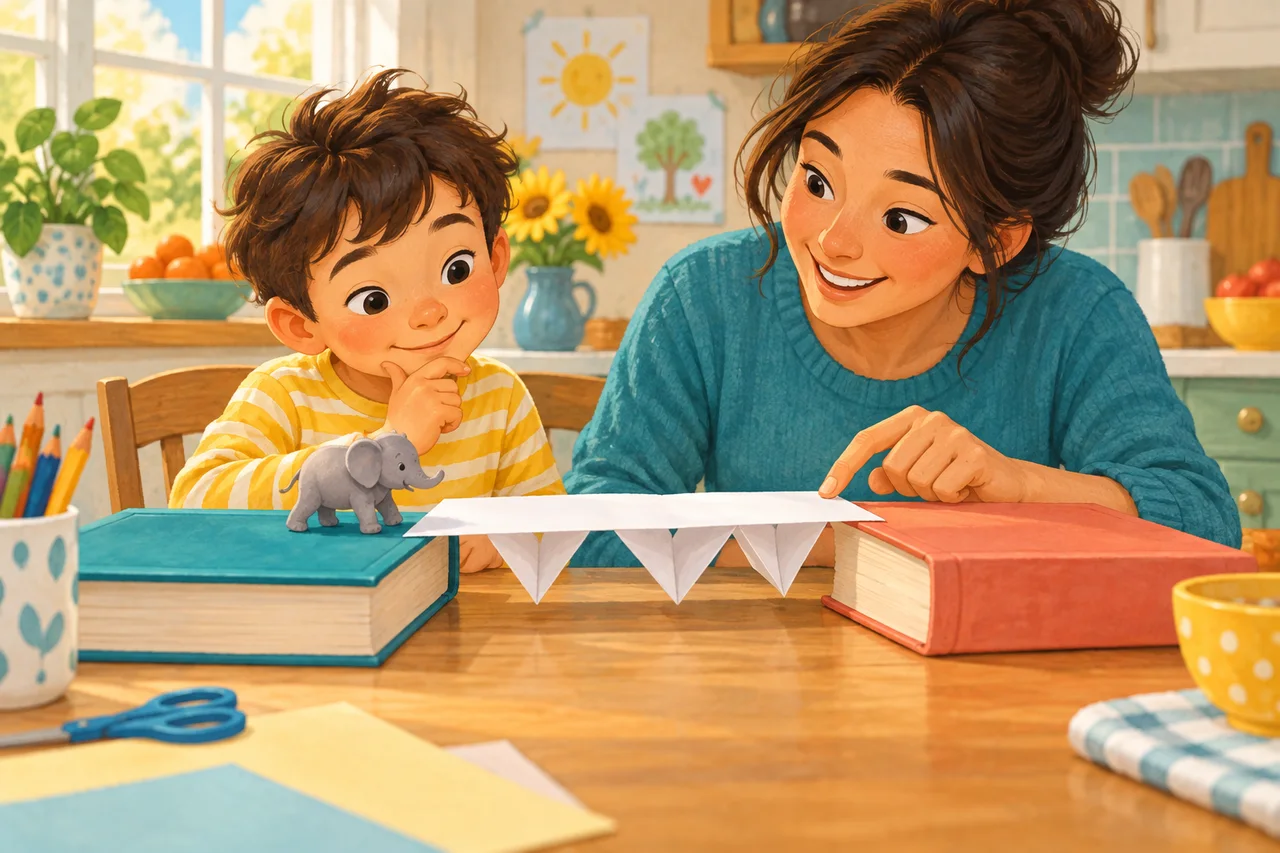
Un puente caído, un camino equivocado o un dibujo sin terminar: acompaña sin resolverlo todo, con un pequeño intento compartido.
Leer la guía completa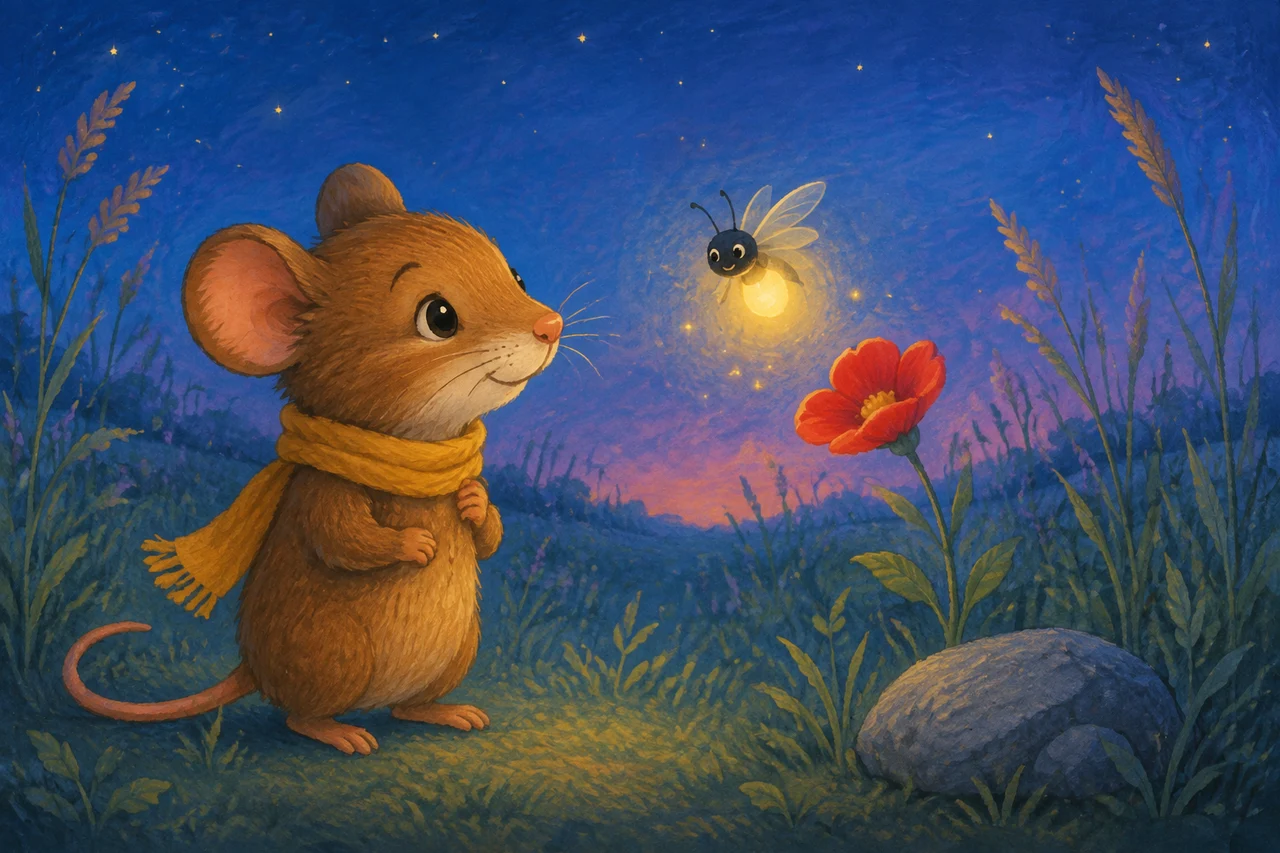
Una ilustración, unas palabras conocidas y una pequeña conversación. La historia importa más que cuánto lea el niño por su cuenta.
Leer la guía completa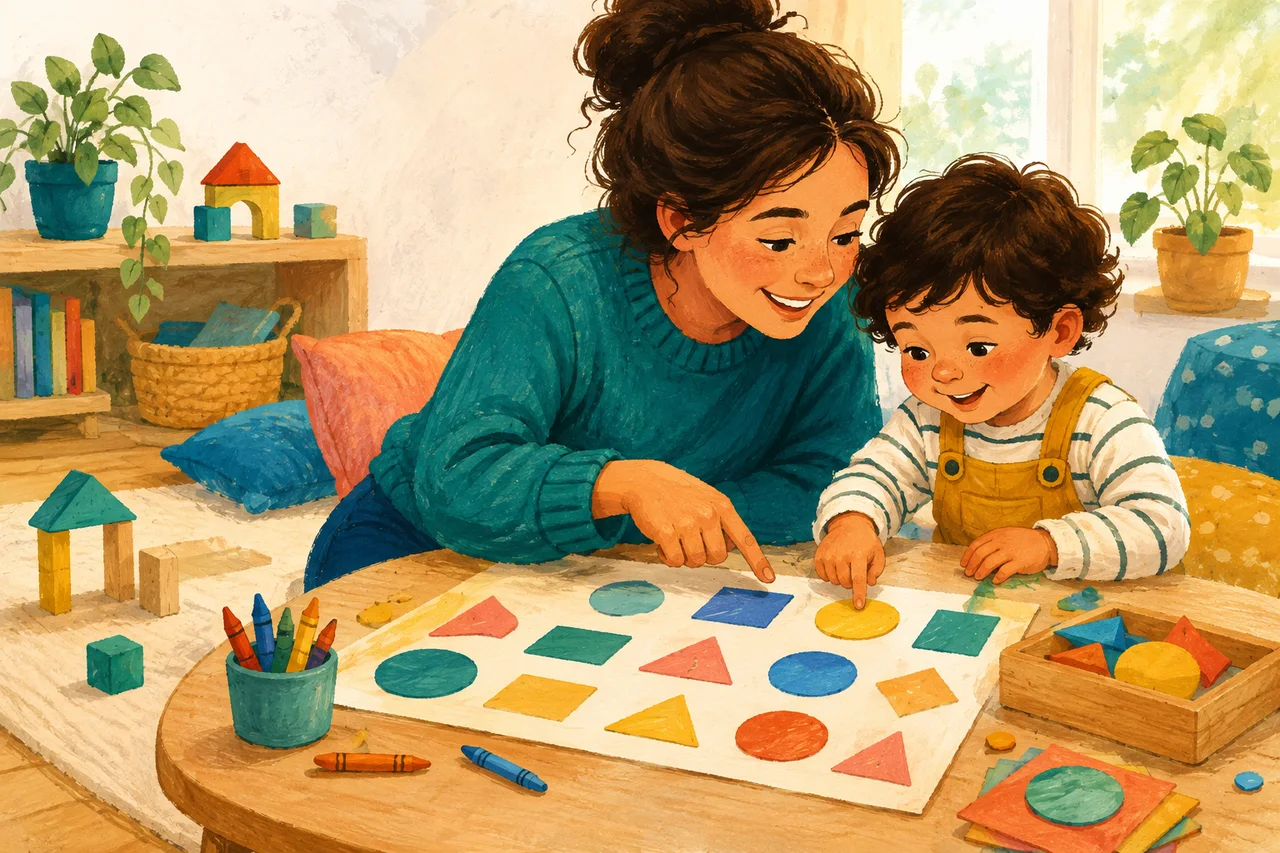
Una tarea real para cada uno, sin convertir al mayor en profesor ni obligar al pequeño a seguir su ritmo.
Leer la guía completa
Una invitación, dos rondas pequeñas y un final cariñoso. Sin compras especiales ni necesidad de tener el ánimo perfecto.
Leer la guía completa
Un final claro, una elección pequeña y un lugar para la idea sin terminar. Un ejemplo sin cuentas atrás interminables ni promesas imposibles.
Leer la guía completaFive focused minutes can be enough. Continue while your child is curious; finish before play becomes a struggle.
Offer two simple choices, begin playing yourself or save the idea for another day. Refusing is communication, not failure.
Wait a few seconds, notice what your child already tried and give the smallest useful hint. Questions often work better than answers.
Describe the effort specifically: “You kept trying different paths.” This helps children notice their own strategy and persistence.
Treat the minute of connection as a complete game. Offer one new choice, but stop warmly if attention has moved somewhere else.
Give them different roles in the same game: one child can search or move while the other explains, records or invents the next challenge.
Pause before teaching. Name the feeling, make the next step smaller and show that changing a plan is part of learning.
Yes. Repetition builds confidence and lets a child notice something new. Change only one detail when the familiar version becomes easy.
a kind reset
Choose the closest situation and get one small, pressure-free next step.
There is no need to rescue the whole day. One calm connection is enough.
for a quiet moment
Busca una ruta en tres niveles. La pista verde de la pantalla no se imprime.
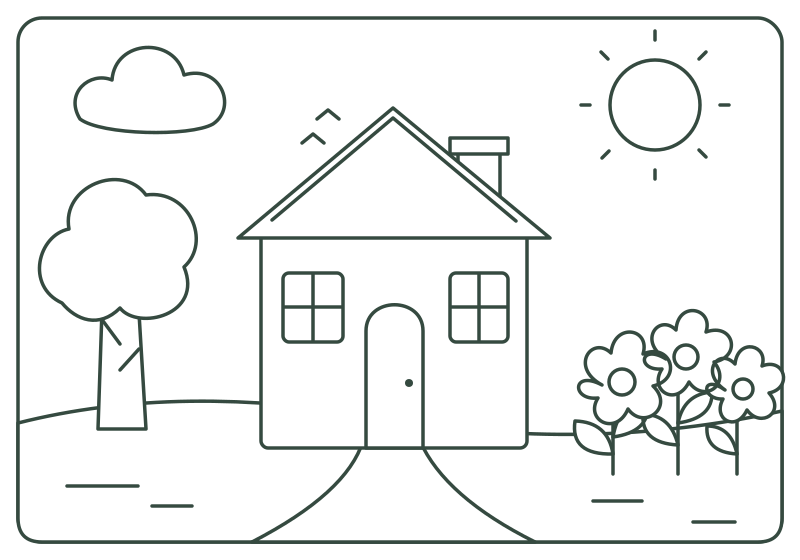
Abrir ficha ↗Elige casa, conejito o mariposa. Imprime un contorno blanco o tus propios colores.
Abrir ficha ↗Dibuja cuatro tonos de un color y ordénalos del más claro al más oscuro.
Abrir ficha ↗Traza puntos, ondas y espirales. Después inventa un camino nuevo.
Abrir ficha ↗

Seis dibujos para notar, imaginar o pasar. Añade tus marcas a esta ficha A4 en blanco; las elecciones de pantalla no se imprimen.
Abrir ficha ↗Percute los símbolos, completa los patrones y crea tu propio ritmo.
Abrir ficha ↗

Mira una imagen u observa algo real con un adulto. Dibuja antes y después en una ficha A4 en blanco; las elecciones de pantalla no se imprimen.
Abrir ficha ↗Prueba los movimientos con una persona adulta en un espacio libre y seguro.
Abrir ficha ↗Compara dos jardines ilustrados y rodea cinco cambios. Dentro del juego puedes elegir otra pareja de imágenes.
Abrir ficha ↗Elige camino o ventana cerrada. Imprime las mismas nueve pistas ilustradas del juego; las no disponibles pueden quedar sin marcar.
Abrir ficha ↗Observa los objetos, tapa la imagen y rodea los que recuerdas.
Abrir ficha ↗

Tres registros en blanco para tus objetos, ideas y observaciones reales, más una pregunta para explorar.
Abrir ficha ↗Elige hoja, velero o estrella con 6, 8 o 10 puntos. El papel coincide con el juego.
Abrir ficha ↗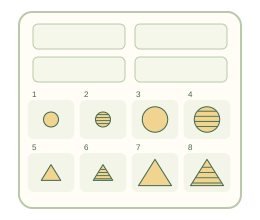
Imprime tus reglas actuales y las mismas ocho piezas ilustradas. Escribe sus números en las bandejas vacías; no hace falta recortar.
Abrir ficha ↗Nombra una emoción, una señal del cuerpo y algo que podría ayudarte.
Abrir ficha ↗Sigue las líneas con el dedo a tu propio ritmo y diseña un globo.
Abrir ficha ↗Ocho tarjetas ilustradas de historias imaginarias en dos páginas A4. Actúen por turnos, propongan una palabra y escuchen la idea del actor, sin puntos.
Abrir ficha ↗Busca con calma objetos redondos, suaves o sonoros y marca tus hallazgos.
Abrir ficha ↗


Doce tarjetas ilustradas: cuatro personajes, cuatro lugares y cuatro sorpresas, más un espacio en blanco para otra idea.
Abrir ficha ↗Planea tres escenas y prepara personajes de papel con ayuda adulta.
Abrir ficha ↗Dibuja la misma nube dos veces y explica qué cambió en su forma.
Abrir ficha ↗


Elige una de cuatro preguntas ilustradas. Dibuja una suposición y una observación real en una ficha A4 en blanco; las elecciones de pantalla no se imprimen.
Abrir ficha ↗Busca colores y detalles, haz una pregunta y dibuja tu propia idea.
Abrir ficha ↗Dibuja la parte iluminada de la Luna en distintos días y compara los cambios.
Abrir ficha ↗Observa una semilla húmeda y otra seca. Dibuja un cambio diario y compara.
Abrir ficha ↗Compara tres formas de papel. Anota el hueco, los bloques y lo que ocurrió de verdad.
Abrir ficha ↗Escribe o dicta un titular y tres observaciones. Distingue claramente historias reales e inventadas.
Abrir ficha ↗keep close
Tap the heart on any game you want to come back to later.
friends & useful links
Independent projects, channels and practical services worth keeping nearby.
Partner links open external websites. A grown-up should preview them before sharing with a child. Some include referral identifiers.Choose a year and country to explore how population, cities, forests and technology changed.
Visit partner ↗Practical examples and calculators for the systems that keep a home working.
Visit partner ↗Tools for ad blocking, DNS filtering and private connections.
A microtask marketplace. Review the conditions independently before using it.
Open service ↗Comparad una semilla húmeda con otra seca y observad cómo la primera raíz inicia una nueva planta.
pruébalo aquí
La guía de abajo ya se puede usar. Los juegos en pantalla, las herramientas de impresión y las notas privadas necesitan JavaScript. Si no aparecen, recarga la página con JavaScript activado.
antes de empezar
Manipulad las semillas juntos, mantenedlas lejos de niños pequeños y animales, y tirad el experimento si aparece moho. No son para comer.
Comparar una semilla húmeda con otra seca enseña a controlar una prueba, observar a lo largo del tiempo y buscar una causa.
para manos pequeñas
La guía de abajo ya se puede usar. Los juegos en pantalla, las herramientas de impresión y las notas privadas necesitan JavaScript. Si no aparecen, recarga la página con JavaScript activado.
parar y probar
preguntad durante el juego
por qué ayuda
Comparar una semilla húmeda con otra seca enseña a controlar una prueba, observar a lo largo del tiempo y buscar una causa.
adaptadlo al niño
Empezad por donde resulte cómodo y cambiad el reto según la curiosidad.
guía completa de juego
Un ritmo sencillo para empezar, observar avances y continuar otro día. Científico de semillas — 10 min.
Preparad: 2 vasos transparentes, 2 judías grandes, 2 servilletas de papel, agua, diario en papel o diario de la página.
Colocad dos judías en servilletas distintas y marcad «húmeda» y «seca». Humedeced una y dejad ambas en el mismo lugar templado y ventilado.
¿Qué cambió primero: la cubierta, la raíz o el brote?
habilidades del juego
Comparar una semilla húmeda con otra seca enseña a controlar una prueba, observar a lo largo del tiempo y buscar una causa.
Seguir los pasos relaciona una idea con una acción y un resultado.
Explicar una elección desarrolla lenguaje, confianza y reflexión.
observa, no examines
Son invitaciones a observar, no requisitos que el niño deba cumplir.
Empieza un paso con menos ayuda.
Mantiene la curiosidad tras una sorpresa o prueba de otra manera.
Usa una palabra, movimiento o idea nueva para explicar su elección.
palabras que abren el pensamiento
Toca una pregunta para ver una continuación suave. Haz solo una y deja espacio para la idea del niño.
Haz una pausa. El niño puede necesitar unos segundos de silencio.
Pregunta: «¿Qué te ayudó a darte cuenta?»
Deja que el niño elija un pequeño cambio para el siguiente intento.
Elige una pregunta; no hace falta hacer las tres.
mantén la curiosidad
Observad una sola semilla húmeda a la misma hora cada día y dibujad un cambio.
Invita al niño a preparar una parte, explicar la regla y decidir cuándo termina el juego.
Medid la raíz, cread una gráfica de cinco días y explicad qué pruebas apoyan vuestra conclusión.
remember the moment
What made your child smile? Keep one thought here for the next play day.
Open the family notebook →
look & learn
think together
a month of little moments
talk with Lumi
today's little mission
Lumi's word of the day
four gentle weeks
 1
 2
 3